Starry Nights at Shelby Farms is on the calendar, the Peabody lobby is glowing, and suddenly your own front yard starts feeling a little… dim. One minute you’re holding a tangled box of lights in the driveway, the next you’re halfway up a ladder thinking, “Why did I start this at 5:15 when it’s already getting dark?”
If you’re looking for safety tips for decorating outdoors, it’s helpful to get the look you want without turning your roofline, trees, or extension cords into a stressful situation. Memphis weather can flip fast, yards can be uneven, and many homes have mature trees that make decorating extra tempting and extra risky. Red’s Tree Service has been working with Memphis-area trees for decades, and the team knows how quickly a “pretty branch” can turn into a hazard when lights, ladders, and wind all show up together.
Start With A Two-Minute Walk-Around Before You Plug Anything In
Holiday decorating goes smoother when the first step is a quick scan, and not a ladder.
Look for these three things:
- Low limbs over walkways and driveways. Those are the branches people bump into while carrying bins, inflatables, or lawn stakes.
- Deadwood. Bare, brittle-looking limbs can snap under a little tug from a light strand or a gusty night.
- Clearance near service lines. Light-hanging gets sketchy fast when the route takes you anywhere close to overhead lines.
Swap idea: If you planned to wrap lights around a limb that sits over your front walk, shift the “wow factor” to a shrub line, porch railing, or a lower tree farther from traffic. The look still lands, and the risk drops.
Ladder Moves That Keep The Night From Going Sideways
Most decorating injuries happen during normal stuff: one more step, one more reach, one more “I can get it.” A few small habits change the whole experience.
- Pick the right ladder for the job. Step stools are fine for porch railings. Anything higher than that deserves a real ladder that feels stable on your yard’s surface.
- Set the ladder like you mean it. Soft ground, wet leaves, pine straw, and hidden roots all matter in Memphis yards. Take 30 seconds to find a stable footing, then angle the ladder so it feels planted before you climb.
- Keep your work zone small. Reaching sideways is where people get into trouble. Climb down, scoot the ladder, climb back up. It’s annoying, and it works.
Swap idea: If you planned to hang lights across a wide roofline in one go, split it into sections and move the ladder more often. Same result, less “lean and pray.”
Red’s Tree Service offers tree trimming and pruning that can remove dead limbs and clear problem areas around roofs, streets, and driveways, which can make decorating feel a lot less complicated year after year.
Outdoor Power Basics Memphis Homes Actually Need During The Holidays
Outdoor decorating is half style, half electrical common sense. The most common problems are simple, like using indoor-rated cords outside, plugging into the wrong outlet, or stacking connections on wet ground.
Here’s what to do instead:
- Use lights and extension cords that are rated for outdoor use. Indoor cords can crack in cold weather or damp conditions, and outdoor-rated ones are built for that environment.
- Plug into a GFCI-protected outlet. Outdoor outlets are typically required to have GFCI protection, and it’s a big deal for shock risk when moisture is in the mix. The U.S. Consumer Product Safety Commission also recommends using outdoor-certified lights and plugging them into a GFCI-protected receptacle or using a portable GFCI.
- Keep connections off the ground. Water pools in low spots, and many Memphis yards have dips or low edges near flower beds. Use a stake, a hook, or a weatherproof connection cover so plugs are not sitting in damp leaves.
Swap idea: If you’re tempted to run one long indoor cord through the garage door because it’s “right there,” switch to an outdoor-rated cord and a safer route through a dedicated outlet.
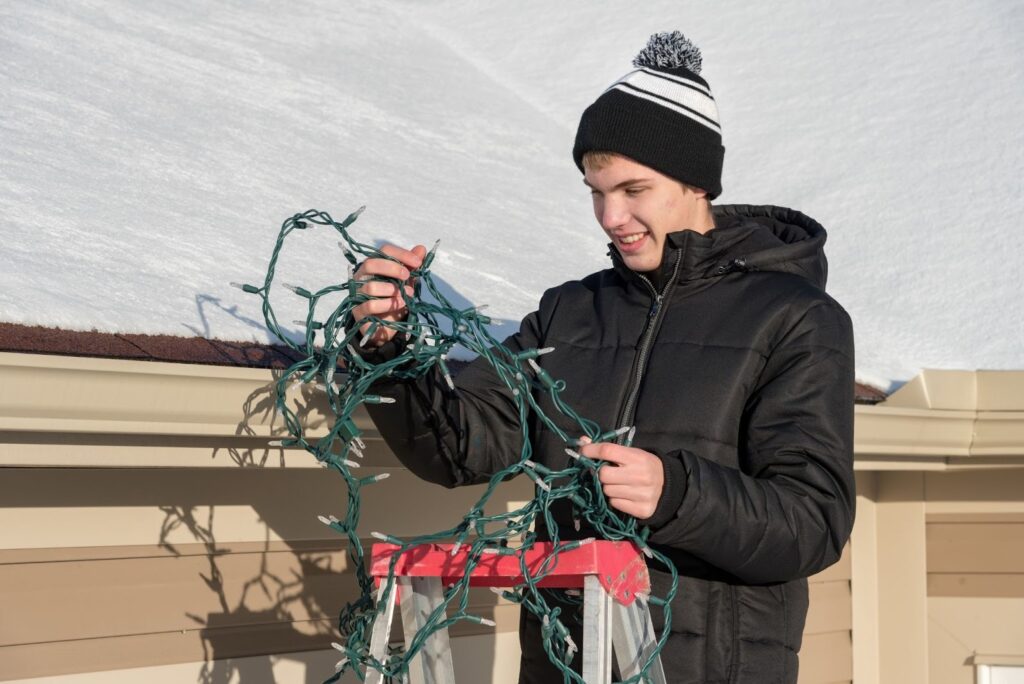
Safety Tips for Decorating Outdoors (safety tips for decorating outdoors) Around Trees, Rooflines, and Yards
This is the part most people skip because it feels obvious, until it isn’t.
Keep Lights Off Power Lines, Period
Holiday lights belong on your house, trees, and shrubs. Overhead lines are not part of the design plan. Give yourself a generous buffer and choose a different area if your only option puts you close to lines.
Swap idea: If your favorite tree sits under lines, light the lower trunk area from the ground with outdoor-rated spotlights, or decorate a different tree and make that one your “no-ladder” tree.
Skip Nails And Staples For Light Strands
Fastening lights with nails, staples, or anything that can pierce insulation invites trouble. Plastic light clips built for gutters, shingles, railings, and masonry keep the wire intact and make take-down easier.
Swap idea: If you usually “tack and go” because it’s quick, switch to clips and plan an extra ten minutes. Less cord damage, fewer weird outages mid-season.
Watch The Weight On Branches
Light strands are light. Multiple strands, garland, ornaments, plus wind can turn into a real strain on smaller limbs.
Swap idea: If you want that wrapped look on a thinner limb, wrap fewer times and spread the visual impact with spacing, then add a ground-level element like a lit wreath on the fence or gate.
Decorating Outdoor Trees Without Turning Them Into A Problem
Outdoor trees are the fun part in many Memphis neighborhoods, especially in Midtown and East Memphis, where mature trees frame the whole street.
Outdoor trees are also where people get bold.
A few rules help:
- Pick the right tree. A healthy, solid tree that’s away from lines and away from your driveway is a better decorating tree than the tallest tree on the lot.
- Avoid wrapping cords tightly around young trees. Tight wraps can dig in over time, especially if decorations stay up longer than planned.
- Use soft ties and removable clips. Anything that cuts into bark is a bad trade.
Swap idea: If you love the idea of a giant lit tree but the branches sit high, create the same drama with a “cluster” approach: wrap lights on a few reachable lower limbs, then add uplighting at the base. The glow reads from the street without a risky climb.
Tripping Hazards And Driveway Traffic During Holiday Season
Holiday nights bring extra foot traffic. Kids run outside after church events, family comes over for dinner, neighbors stop by, and suddenly your yard has a lot more movement than usual.
- Keep cords out of walking paths. Crossing a sidewalk with a cord is where ankles get rolled.
- Avoid running cords through doors or windows. Pinched cords get damaged easily, and doorways are constant movement zones.
- Use timers, so you’re not constantly plugging and unplugging. Timers also reduce the odds that lights stay on all night because everyone fell asleep during a Christmas movie.
Swap idea: If your display plan requires cords crossing the front walk, rethink the layout so your powered items sit on one side, then add battery-powered décor on the other side.
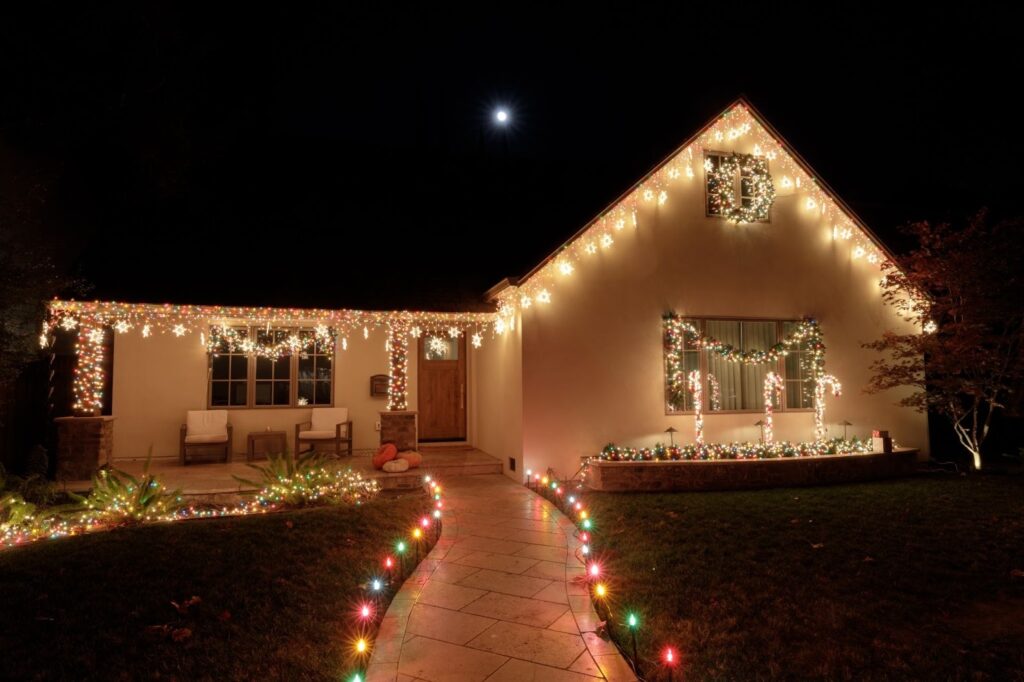
Want A Safer Setup Before You Hang The First Strand?
If a limb is hanging over your roofline, a tree looks questionable, or you just want the yard cleaned up before guests and holiday events, Red’s Tree Service can help. Our team can work with Memphis homeowners on trimming, risk checks, storm-damage cleanups, and removals when a tree is simply in the wrong spot.
Reach out to request an estimate, and tell the team what you’re planning to decorate. They can take a look at the trees around your home and help you feel confident that your lights are going up on something solid, not something waiting to snap.
Posted by Reds Tree Service This post first appeared on https://redstreeservice.com