Author: admin

Sudden Oak Death: What You Need to Know

Tree infected with Sudden Oak DeathSudden Oak Death (SOD) is a serious disease that often necessitates tree removal. It is caused by the plant pathogen Phtophthora Ramorum. SOD spreads by air and water; its most common transmission method is to splash onto other plants via rainwater. Since the mid 1990s, SOD has killed millions of trees in Oregon and California. It was first found in Oregon nurseries in 2003. OPB reports, “If Sudden Oak Death goes unchecked, it could cause significant damage to Oregon’s forest ecosystems.” Sudden Oak Death is worthy of its name; it can kill a tanoak in a few days. However, this plant pest affects more than just oak trees; rhododendron, evergreen huckleberry, azaleas, red oaks, and 130 other beloved Oregon plants are susceptible to SOD. To protect your plants from this deadly disease, read on.

Sudden Oak Death: Protecting your Garden from the Ravages of Phtophthora Ramorum

Signs of SOD Infection. Phytophthora Ramorum manifests in two different ways, depending on the host plant. In shrubs and other non-woody plants, the disease shows as leaf spots, and sometimes shoot dieback. In tanoaks and oaks, the same pathogen causes a completely different symptom: bole or trunk cankers, with dark thick sap seeping from bark.

Keep in mind that other organisms and injuries can cause similar symptoms as SOD. To ensure accurate Portland tree care, it may be necessary to have a tissue sample from the tree tested at a laboratory, and to consult with Portland Certified Arborists who can identify what Phytophthora Ramorum looks like in various plant species.

Protecting your trees from SOD

A knowledgeable and watchful public is key to Oregon tree care, This vital prevention strategy can slow or stop the spread of Sudden Oak Disease. If you have identified that you live in an area affected by SOD, or have trees or shrubs that are susceptible to SOD, one way of prevention is to take many samples from many trees annually.

If you are coming and going from an area that is infected with SOD, make sure clean shoes, vehicles, pets, etc. before returning to the uninfected area.

An April 2015 OPB report on SOD similarly recommends the following prevention strategies:

  • Determine if you have any susceptible species.
  • Check to see if you are in a currently infected area (although, even if you are not your trees and plants can still be susceptible).
  • Inspect your trees and plants for symptoms.

Sudden Oak Death is serious business. Once called the “Ebola of the plant world” by Ross Meentemeyer, director of the Center for Geospatial Analytics, SOD has the potential to devastate and wipe out the beauty of Portland’s tree-line streets, parks, and backyard gardens. It is important to prevent SOD (and ensuing Portland tree removal) when possible. Proper diagnosis and treatment and certified Portland tree care experts can help you identify, treat, and prevent the spread of this nasty tree virus. If you think that your tree may have become infected, or have other SOD related questions, it is paramount that you get in touch with Urban Forest Professionals immediately! Only you can prevent the spread of Sudden Oak Death.

This post first appeared on https://www.urbanforestprofessionals.com

Tree Care During a Drought

Fruit trees in a droughtIn early 2015, Governor Kate Brown declared a state of drought emergency in counties throughout Oregon. This is the first drought in the state since 2004. Drought can devastate agriculture, threaten livestock, and deplete natural resources. Another potentially major consequence of drought is compromised tree health. As we head into what wildfire experts are saying could be the driest summer in twenty-five years, it’s critical to preserve your own trees by brushing up on Portland tree care for drought.

Portland Tree Care: Tending to Your Trees During a Drought

  1. Recognize Signs of Tree Stress

To properly mitigate the risks of drought, knowing the symptoms of tree stress is a good place to start. The first, and perhaps most, devastating damage occurs long before any apparent signs of trouble, in the form of root damage below the soil. In an attempt to amend the imbalance of this root loss, the thinning of the tree canopy may occur.

Evergreens demonstrate stress through the discoloration of their needles, sometimes turning brown at the tips, progressing through the needle towards the twig. At other times needles may turn yellow, red, or even purple. Deciduous trees may acquire “scorch,” in which leaves brown between veins or on the outside edge. Other drought stress symptoms may include leaves that wilt, yellow, and curl.

A side effect of drought is the onslaught of unscrupulous pests and diseases, including boring insects and fungal pathogens. Stressed trees go through chemical changes that attract opportunist pests. A tree weakened by drought provides easy access for infestation and pathogens.

  1. Caring for Trees During Drought

While providing Oregon tree care services, we’ve seen a few common mistakes among well-meaning homeowners hoping to nourish their trees through dry spells. A common mistake is watering at the base of a tree, which is not where it finds its nourishment. Another is fertilizing during signs of drought stress, which can cause root burn. Instead, refrain from fertilization during drought, and water beyond the tree’s drip-line to reach the full expanse of the roots. Here’s a quick rule of thumb: Look at the height of the tree, and imagine roots growing two to four times that distance down into the earth. So watering farther around the circumference of the tree will help ensure that it is thoroughly nourished.

It is also important to make sure that moisture reaches twelve to eighteen inches below the surface—otherwise, the tree will not be able to absorb enough water. You can use a soil probe to help you determine when this has been accomplished. To retain moisture between watering, layer four or five inches of organic mulch on the soil surface, six inches from the trunk of the tree. Remember to also properly prune away dead or infested branches to improve the tree’s overall health. Prioritize watering young or new trees, trees that have recently received root injury due to construction, and trees that are growing in a restricted root zone, such as next to a sidewalk.

Tree watering is important all year round. In April to September you should water about three times a month, and in October through March water one to two times per month.

Despite the wealth of information on tree care it may still be challenging to determine the state of your trees in a drought and what steps to take to preserve the life of the tree. Fortunately, our Portland certified arborists are ready to help you mitigate the early and unnecessary death of a tree. Even the most caring amateur homeowner may fall short in tree care during challenging seasons. Contact us to arrange for consistent tree care during this hot, dry summer.

This post first appeared on https://www.urbanforestprofessionals.com

Neighbor Tree Damage: Who Pays?

The Pacific Northwest sometimes sees extreme weather, and windstorms with gusts in excess of 60 mph are not uncommon during the stormy part of the year. Such high winds take their toll sending heavy limbs, debris, and even entire trees crashing down, potentially damaging property.

Recently, a woman posted a picture on our Facebook page showing a tree that had fallen onto her house from the neighbor´s tree falls from neighbors property who is liable portland tree trimming & removalproperty. She explained her confusion about who was responsible for damage from fallen trees. In this post, we’d like to explore the nuances of this situation and attempt to provide some clarity about who is responsible.

As Portland certified arborists, this isn’t a new circumstance for us. In the course of providing Portland tree removal, we’ve seen plenty of neighbor disagreements about fallen trees. In every such circumstance, the first thing to consider is homeowners’ insurance. “Healthy” is a keyword when seeking tree damage coverage under homeowner policies. When a healthy tree falls it is considered an act of God or Nature, and your homeowner’s insurance will cover the cost of damages to your property (minus the deductible and within the provisions of your policy). If the fallen tree is not considered healthy, you face an additional layer of complexity.

Portland Tree Care Experts on Tree Damage Liability.
Let’s take a look at insurance coverage in various possible scenarios.

Your tree falls on your house. Your homeowner’s policy should cover this; however, you should be aware of your policy coverage limits. Chances are that you will have to pay a deductible before coverage kicks in. Your coverage likely includes your main home, garage, sheds, and other outbuildings. If structures have been damaged, the policy should also cover debris removal.

Your tree falls on your neighbor’s house. Under most conditions, your neighbor’s homeowner’s policy will cover damage to their property.

What about the damage that could have been avoided? As a homeowner, it is your responsibility to maintain your property, including your trees. If your trees have existing damage such as visible rot and don’t take care of it, you could be deemed liable if the tree falls.

Be a good neighbor. Avoid liability and prevent neighbor bickering; maintain your trees and regularly inspect for damaged branches, disease, and rot. Of course, as Portland tree care experts, we are available to help in this and all other aspects of tree maintenance. Additionally, we consider it good form to offer to pay for or split your neighbor’s deductible if your tree damages their property. There is no guarantee they will do the same for you if the situation is reversed, but in our experience, it is best to give them the benefit of the doubt.

On the other hand, if you see that your neighbor has damaged or rotting branches that could potentially harm your property, it is advised to write your neighbor a friendly letter to let them know and to ask them if they could remove or trim the tree in question. You can also send a copy to this letter to your insurance company. The goal here is to kindly remind neighbors that if their unhealthy tree causes damage to your property, they could be liable.

Everyone here at Urban Forest Professionals is here to help as well. Our arborists can give a thorough and professional inspection, including diagnosis of potential problems. We can then remove damaged and diseased branches/sections, relieving you of any potential liability.

Remember—you are not liable for any damage that your healthy trees do to your neighbor’s property, but this only applies to healthy trees. You can be held liable if regular maintenance could have prevented the damage. Therefore, it’s best to arrange for regular tree care. Call us today about a tree inspection; by ensuring the health of your trees, you could be saving yourself hundreds of dollars on damage liability down the road.

This post first appeared on https://www.urbanforestprofessionals.com

Urban Forest Pro FAQ’s: What are my Options for Replanting my Tree?

Spring is here, and many people are thinking about tree planting, whether to add more shade or to replace trees that have been removed. As Portland certified arborists, we consistently field homeowners’ questions about replanting options. After arranging our Portland tree removal services for a tree lost to winter storm damage or disease, our customers often hope to replant another tree in the same spot. However, replanting is not as simple as it may seem. It’s important to choose a tree that will thrive in your available space. Moreover, city law may restrict your replanting options. Read on for our tips on replanting.
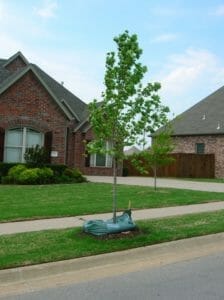
Freshly planted tree outside of homeTree planting is an area of urban arboriculture where major and costly mistakes are often made. The two major problems are 1) Choosing the wrong tree, and 2) Putting it in the wrong place. When choosing a tree, think about its preferred growing environment, its mature size, disease concerns, and other factors. If you’re unsure about whether a certain species will work, arrange for a tree consultation with one of our arborists.

Once you’ve found a species that will fit well in your available space, be picky about selecting the right specimen at the nursery. Our blog post on choosing a tree like a pro has advice on how to buy a healthy tree. Ultimately, when it comes to Portland tree planting, the ideal approach is to work with an experienced arborist who can help you select and plant the new tree.

Municipal restrictions are another area of concern when replanting trees. As the homeowner, it is up to you to be aware of local restrictions and regulations, which do vary around the Metro area. Portland, in particular, has some rather tight guidelines that could lead to a fine if not closely followed.

Portland Tree Planting Regulations

Street Tree Permits. If you intend to replant a street tree in Portland, you will need to get a permit that approves the tree type and size. To determine if a tree is considered a street tree, follow the City of Portland’s online instructions, which direct you to PortlandMaps.com to locate the tree. Basically, if more than 50% of a tree’s trunk is in the public right of way, it is considered a street tree.

Planting in your Yard. Although Portland has restrictions about what kinds of trees can be removed, the possibilities are endless as to what kinds of trees that can be planted in your yard. We recommend that you take a look around and see what you like and don’t like about the existing trees in your neighborhood. A professional arborist or horticulturalist can help you make an informed decision about what kinds of trees will grow best in your intended location.

Permits. In Portland, permits are needed for pruning, removing, and planting street trees or trees on commercial property. If you do not get a permit, you could be subject to fines of up to $1000 per tree, or $100 per inch of diameter—even if the arborist never told you that you needed a permit. At UFP our certified arborists can help you attain the necessary permits.

Mitigation. Some local municipalities, such as Lake Oswego, require that homeowners replant a new tree when an old tree is removed. This practice is referred to as mitigation, and it comes with its own set of city regulations. For example, in Lake Oswego no mitigation is required for trees that have been removed because they are hazardous or dead. Mitigation is required when a tree has been removed from a Lake Oswego right-of-way. Our Portland certified arborists can help you create a mitigation plan for tree removal.

Replanting for other reasons. The trees in our urban landscape provide both economic and environmental benefits. Mature trees add property, clean the air by producing oxygen, and provide habitat for nesting songbirds, among other benefits. The average lifespan of an urban tree is only 10 years, and most trees don’t reach maturity until 20 years, illustrating that maintenance is important to extending a tree’s lifespan. These numbers also emphasize just how much replanting actually goes on in an urban environment.

Whatever your reason for planting a new tree, we’d love to help. Our Portland tree services include consultation, tree sales and tree planting. For $300, we will take care of the whole process, from tree selection to planting. Our trees are premium stock; as such, we guarantee their health for three years against everything except vandalism and drought. Call us today about replanting a tree in your yard. If you’re wondering how much to relocate a tree check out this blog post.

This post first appeared on https://www.urbanforestprofessionals.com

The Benefits of Adding Green Space to your Property

Green spaces are aesthetically pleasing. Whether you’re looking to boost your home’s curb appeal, or hoping to bring in new customers, attractive landscaping is a must. Moreover, trees and bushes benefit the environment while also reducing heating/cooling costs. Let’s take a closer look at the advantages of luscious greenery around your home or office.

Trees improve home value.Portland Tree Service on the Myriad Benefits of Green Spaces

Multiple Environmental Benefits. From filtering groundwater to improving air quality, plants help the earth in many ways. Their roots protect water quality by reducing the amount of nitrates that leach into the soil, while also protecting our watersheds from pollutants. Think of trees and shrubs as underground filtration devices, cleaning water before it flows into local rivers and streams. Trees help to regulate temperature, reducing the need to use fossil fuels for heating and cooling buildings. Finally, plants minimize erosion by holding soil in place. This means less flooding and fewer mudslides.

Higher Property Values. Envision two identical homes, side by side. Now imagine one with shimmering, rustling trees, radiant flower beds, and enchanting shrubbery. The home next door has the same floor plan, but an overgrown, weed ridden lawn in front. Which home do you think would sell first? Humans are naturally attracted to the beauty of gardens, so it’s no surprise that landscaped homes and businesses boast increased property values. Indeed, well maintained green space can increase the value of a home by as much as 20%! That’s reason enough to arrange for our Portland tree services.

Cooler Buildings. Plants’ economic benefits don’t stop with increased property values. Surrounding your home with trees and plants also creates a more temperate indoor atmosphere. This can save quite a bit on air conditioning expenses. More green outside=more greenback inside. Urban air temperatures can soar during summer months, as asphalt and concrete soak up sun and create heat sinks. According to the EPA, by shading sidewalks and homes, trees and bushes reduce heat sinks, while also humidifying the air through evaporative cooling.

Improved air quality. Trees remove shocking amounts of pollutants from the air. Research has found that one acre of trees can remove 13 tons of gases and particles on a yearly basis. Trees “breathe in” the carbon dioxide that our cars spit out, and in exchange they provide us with fresh oxygen to breathe.

Commercial Benefits. Studies have shown that workers are more efficient when they can access and see green spaces. Employees experience higher job satisfaction when they enjoy a pleasant outdoor view. Moreover, greenery has been shown to boost civic pride while simultaneously drawing in tourists and shoppers.

This is only a sample of the plethora of benefits that green spaces offer. They also reduce cities’ septic drainage problems, by reducing the speed at which storm water drains to rivers. Here in Portland, the city is adding street-side drainage reservoirs with grasses, trees, and bushes to slow down storm water drainage and prevent sewage from overflowing into the Willamette River during major storm events.

Clearly, green spaces are smart, from economic, environmental, and even psychological perspectives. However, when aiming to achieve these benefits, it’s important to work with a professional Portland tree service or landscaping company. As Portland tree trimming experts, we recommend always working with certified arborists. Portland homeowners should be aware that property values will be decreased under subpar tree care. Avoid wasting money on landscaping and tree planting, Portland property owners—work with proven landscaping and tree care companies. To learn which zones around your business or home would best support trees and other greenery, give us a call. Our ISA-certified arborists can provide expertise on tree placement and long-term care.

This post first appeared on https://www.urbanforestprofessionals.com

Oregon’s Arbor Month in April!

Tree City USA LogoThe Oregon flag shows the state seal, with four Douglas-fir trees; the flag’s flip side features the only tree-chomping engineer in nature, the beaver. This symbolism says volumes about how important trees are to our state, from both aesthetic and economic perspectives. As Paul Ries, manager of the state’s Urban and Community Forestry Program puts it, “Trees are important to the quality of life here in Oregon, where we have some of the most productive forestland in the world and some of the most livable cities around.” Officially, the U.S. celebrates Arbor Day on April 24th. But our state is so enamored of trees that the Oregon legislature has also designated an Arbor Week—the first week in April. Really, there are enough tree-loving celebrations going on in the Beaver State that we’re considering April Arbor Month! As Oregon tree care specialists, we are thrilled to see such Oregon arborphilia in full bloom.

Oregon Celebrations for Arbor Month, April 2015

Arbor Week: April 6-10th. While America’s Arbor Day is always the last Friday in April, each state celebrates its own Arbor Day based on the region’s best time to plant trees. Florida, for instance, celebrates Arbor Day on the first Friday in January. Here in Oregon, we officially celebrate trees from April 6-10th. The Portland Arbor Day Festival was held on April 11th. On that day, the city honored the winners of the Bill Naito Community Trees Award. Tree information was shared, and families participated in crafts, nature stations, and tree-themed games. The previous day, the city’s urban forestry crews facilitated bucket truck rides, elevating Portlanders to a “squirrel’s eye view of downtown.”

April 10th: Statewide Heritage Tree Dedication. The Oregon Department of Forestry’s Salem headquarters hosted a dedication and award ceremony celebrating the state’s heritage trees and those who care for them. Groves and individual heritage trees are honored as fascinating, storied specimens. There are more than 50 heritage trees across Oregon.

April 25th: Southeast Portland Flowering Tree Tour. Portland Parks and Recreation Urban Forestry and the Sunnyside Tree Team are partnering up to provide a walking tour of spring flowering trees in southeast Portland. From 1 to 3 pm, participants will enjoy viewing local trees in full bloom. Refreshments will be provided at the meet up spot, the Belmont Library at 1038 Cesar Chavez Blvd. The tour will depart at 1:30pm.

Oregon Tree Cities. As your Portland tree care experts, we’re always rooting for increased urban canopy coverage here in the Rose City and in other Oregon towns. So, we were happy to read that 56 Oregon cities are designated as Tree City USA communities. The Tree City USA program is organized by the National Arbor Day Foundation and funded by the Oregon Department of Forestry. This year, a central Oregon burg, Stanfield, was added to the list of Oregon Tree Cities. About 3,400 cities across America qualify for this moniker, which indicates that they have a tree board/department and ordinance; spend a minimum of $2 per person on a tree program; and hold an Arbor Day celebration.

Keep the momentum of Arbor month going by arranging care for your own trees. Our arborists offer a full menu of Portland tree services, including pruning, removal, cabling, planting, and assessment. If you’re just getting started with tree care, we recommend a tree assessment, in which our Portland certified arborists visit your property and provide a spoken explanation of your trees’ condition. Available for a small fee, an assessment is a great way to get a few DIY solutions for any minor problems. And should more significant issues arise during your assessment, every member of our team is an ISA-certified arborist, so you can rest assured of their expertise. Contact us today to arrange Portland tree services.

This post first appeared on https://www.urbanforestprofessionals.com

What’s the Difference Between Landscapers and Arborists?

Rose City residents may not know the difference between landscapers and arborists. They might just think of it as working with “Thorns” versus “Timbers.” However, the comparison is more complex than that and goes far beyond Providence Park!

Horticulture and arboriculture share some common ground – the care of natural surroundings. Landscapers and arborists can work together, yet the two are not interchangeable. While both work with plants, one is more specialized than the other. When looking for Portland tree services, it’s important to know the difference between landscapers and arborists, or else you could end up with lackluster service.

You can expect Landscapers to know how to care for the land, such as:

  • Urban Forest Pro Certified Arborist at workDesigning and installing landscape (natural features) or hardscape (man-made fixtures).
  • Installing and maintaining lawn irrigation, and ensuring proper water drainage.
  • Covering land with mulch to enrich or insulate the soil.
  • Preparing, creating, and maintaining garden beds.
  • Pruning shrubs to promote health.

Although landscapers are skilled at horticulture, they are ill equipped to handle complicated tree projects. Landscapers may not have the appropriate tools or training to complete arboricultural jobs correctly – or safely. Too often, a landscape contractor attempts arboriculture, only to hurt himself or damage the property.

In contrast, Arborists are “tree doctors” who specialize in tree health. They are extensively trained and properly equipped to tackle challenging tree work, such as:

  • Assessing the condition of trees and how to heal disease.
  • Pruning trees, in consideration of available space, tree health, and productivity.
  • Removing or reducing trees correctly and safely.
  • Cabling or bracing vulnerable branch unions to create structural support.
  • Transplanting and replanting trees to more appropriate locations.
  • Performing deep root or tree spike fertilization to provide trees with key nutrients.
  • Injecting fertilizers and pest control formulas into trees.
  • Grinding stumps, ensuring a tree’s remnants are is eradicated.

Safety considerations highlight the differences between landscapers and arborists. Arborists are trained to use specialized tools to climb and cut trees safely. From rigging to harnesses to aerial lift equipment, providing Portland tree services for the towering species in our area requires unique equipment—equipment that landscapers don’t have.

Liability insurance distinguishes these fields as well. Trustworthy Portland certified arborists carry extensive liability insurance to protect themselves and the homeowner; in contrast, landscapers are not typically insured for arboricultural liability. Homeowners may have to foot the bill for damage if the contractor doesn’t carry the proper insurance for Portland tree removal or other services.

City codes for the City of Portland State that homeowners must obtain permits before planting, pruning, or removing certain trees. According to the city’s new tree code, failing to acquire the correct permits could bring fees of up to $1,000 per day, per tree. To avoid fines, it’s best to work with a certified, experienced arborist. For example, Portland arborists can identify whether you have a heritage tree on your property. Heritage trees are protected by City Code; they can only be removed when officials confirm that they’re dead, dying, or dangerous—and in all cases, you’ll need Portland certified arborists to get the job done safely.

Ultimately, it’s best to see these two fields—Horticulture and Arboriculture—as separate jobs best left to their respective professionals, landscapers and arborists. Of course, some Portland arborists also offer extensive landscaping services. However, for the health of your trees and the safety of your family, it’s best to entrust tree services only to certified arborists. If you want more information on when to call an arborist or a landscaper, check out this informative presentation by a group of Tree Care Industry Association board members, and read our blog on How to Select a Certified Arborist.

This post first appeared on https://www.urbanforestprofessionals.com

Your Ultimate Spring Tree Care Checklist

Spring has bounded into the Portland area! As blossoms emerge, it’s time to conduct the following basic tasks for the health of your trees. So as to give your trees a long, productive growing season, it’s best to complete these tasks early in the season, in March and early April. Let’s take a look at the tree care projects Portland homeowners and businesses can tackle to keep trees healthy this spring.

Spring tree careChecklist for Spring Tree Care: Portland ISA Certified Arborists’ Recommendations

Post-Winter Cleanup.
Remove twigs, leaves, and other detritus that may have accumulated beneath and around trees. As we discuss in an earlier post on Portland Spring Tree Care Tips, warmer weather signals the time to remove any protective plastic or coverings you may have had in place during the cold winter months.

Inspect Trees for Damage & Disease.
Look for obvious signs of tree disease, including broken branches, holes, molds, and fungi. Also notice which branches do not put out blossoms or leaves—these are likely dead and ready to be pruned away, ideally by a professional Portland tree pruning service, such as Urban Forest Pros. Winter desiccation, also known as “winter burn,” can occur when plants dry out in cold winter conditions. Winter sunscald is another challenge; it manifests as vertical cracks in tree bark. Discoloration is another clue that something may be amiss. For instance, some plants will yellow if they receive too much water. If you have questions about damage, call an experienced arborist for sound information. Our Portland ISA-certified arborists can recommend when to remove branches, when to add supportive cables, and when it’s best to remove the whole tree, rather than risk it crashing down in the next storm.

Plant New Trees
Trees bring dozens of benefits to your home or business! They reduce noise levels, stabilize soil, and give wildlife a place to perch. Trees also increase property values while decreasing energy costs. Spring is a good time to add trees to your property, as their roots will have enough time to dig in before scorching summer temperatures hit. Of course, every tree species has its own preferences, so feel free to contact us with questions about the best time to plant a new tree.

Add Mulch. Mulch serves several purposes: It provides protective cooling during the hottest, driest parts of the year; it helps trees retain moisture; and it minimizes weed growth. Trees that are fewer than 10 years old should definitely be mulched, but trees of all ages benefit from mulching. Just be sure to leave a clear space right around the trunk; otherwise, damaging disease will have an easy foothold.

Water & Fertilize. Once the soil has thawed, water your trees to keep their soil moist on dry days.
Fertilization can also be done in the spring months. Fertilizer is a good idea whenever soil lacks the macronutrients and micronutrients that trees need to thrive. To figure out if an established tree needs fertilization, observe its shoot growth, i.e., the growth that happens in a single year. In general, shoot growth of less than 2 inches indicates a fertilizer may be required. Of course, certified arborists take many other factors into account when prescribing the best fertilization approach. Beyond soil testing, foliage color and the history of the yard should also be considered. As far as timing goes, it’s ideal to provide slow-release fertilizer prior to the tree’s springtime growth spurt. While fertilization timing varies by location, by soil conditions, and by species, a good rule of thumb is to apply fertilizer as soon as the ground is workable in the spring.

From Portland tree removal to pruning to fertilization, you can count on Urban Forest Pros, your Portland tree experts, for springtime tree care. Our customers love how we go the extra mile when providing tree service. Portland-ers are so pleased with our work that they’ve given us four back-to-back Angie’s List Super Service Awards, putting us in the top 5% of our field. Call us today to arrange a springtime tree assessment for your home.

This post first appeared on https://www.urbanforestprofessionals.com

Beyond the Classroom: High School Students Plant Trees and Learn

Who says learning only happens indoors? Beaverton students recently took the classroom outside–and left a positive, lasting impression on their local ecosystem.

About 100 eighth-graders from Beaverton Health and Science School went to the Willow Creek Greenway to learn about Oregon’s native species and plant trees along the creek bank. They got their hands dirty getting first-hand experience on how to help their community reach long-term environmental goals. The students successfully planted some 400 willow, red twig dogwood, Douglas-fir, and Pacific ninebark trees–which will clean surrounding air and provide wildlife habitats for generations to come.

This special tree planting Portland-area field trip was part of Tualatin Hills Park and Recreation District’s outreach service program that educates students at their local parks.

It’s a simple truth: Environmental education is important. Today’s children are tomorrow’s leaders. They need to know how to take care of our natural resources to ensure the well being of future generations. But with today’s abundance of high-tech distractions, kids often turn to the TV when they could be getting in touch with nature. Getting connected with technology can disconnect us from the natural environment. Consider these troubling facts:

  • On average, American children between the ages of 6 and 11 spend about 28 hours a week watching television instead of playing outside.
  • Kids who consistently spend more than 4 hours per day watching television are more likely to be overweight and face health problems.
  • Two out of three adult Americans failed a basic 12-question multiple-choice quiz about the environment, according to the National Environmental Education Foundation.

To cultivate healthy and responsible youth, we need to promote environmental stewardship. More than one in six Americans spend their daily life in K-12 schools, where environmental curriculum is rarely incorporated in lesson plans. That’s unfortunate, since studies show that environmental education improves children’s lives by:

  • Teaching tree classes outsideHeightening children’s imagination and enthusiasm for academics.
  • Building critical thinking and relationship skills.
  • Enhancing cognitive functions, such as reasoning, problem solving, and memory.
  • Fostering both cooperation skills and leadership qualities.
  • Inspiring learning opportunities outside the classroom.
  • Helping students and teachers feel empowered about their roles in their communities.
  • Encouraging children to go outside and be physically active.

If young people don’t spend time outside gaining a basic understanding of the environment, how can we expect them to take on the daunting environmental challenges on the horizon?

With service-learning programs, students can incorporate lessons about the environment into their everyday life. After removing litter from Willow Creek, we’re betting these Beaverton students are thinking twice about where they leave their trash. They might not pursue a career in the outdoors, like say, becoming certified arborists, but at least they’ll be in the right mindset to care for our planet.

Only an educated public can ensure a healthy environment. Every industry can benefit from environmental education, from teachers training tomorrow’s leaders, to scientists developing clean energy technologies, to health professionals advocating for pollution controls, to business managers understanding the impacts of their investments. Environmental education isn’t just good for the planet; it’s good for humankind. As your Portland and Beaverton tree service company, we’re thrilled to see opportunities for area youth to experience and care for the environment.

This post first appeared on https://www.urbanforestprofessionals.com

Interested in Trees? Apply for the Portland Fruit Tree Project’s 2015 Harvest & Stewardship Intern Position!

Do trees fascinate you? Do you jump at the chance to help others? If so, we recommend applying for the Portland Fruit Tree Project’s Harvest and Stewardship Internship. As certified arborists, Portland opportunities for learning about and protecting trees excite us. This internship is an incredible opportunity for budding arborists who want more hands-on experience working with Portland trees.

Portland Fruit Tree Project (PFTP) gathers fruit from Portland trees that would otherwise go unharvested. By organizing Portland Fruit Tree Project Intern positionvolunteer groups to pick fruit before it falls, PFTP prevents waste. What’s more, the group distributes the harvested fruit to people in need. Finally, this impressive Portland tree service organization presents hands-on workshops in how to care for trees and preserve their fruit.

As providers of Portland tree services, we’ve partnered with the Portland Fruit Tree Project many times over the years. Just last month, our founder Jeff Moore lead a winter fruit-pruning workshop hosted by PFTP. And every year, we help the PFTP harvest and distribute thousands of pounds of Portland fruit that would otherwise rot. To show our support for this exceptional non-profit, we’re promoting the Harvest and Stewardship Internship position.

The 2015 Harvest and Stewardship Intern Position with Portland Fruit Tree Project

Starting April 1st and working 12-20 hours per week through September 30th, the Harvest and Stewardship Intern will:
–Assist with the coordination of PFTP Tree Care Teams program and Tree Care Workshop series.
–Help to maintain Portland Fruit Tree Project’s Community Orchards;
–Co-Lead harvesting events;
–Coordinate harvesting program in general;
–Process new tree registrations and coordinate with registered fruit tree owners; and more.

The Harvest and Stewardship intern will work out of Portland Fruit Tree Project headquarters in NE Portland, but he or she will also travel throughout Portland for events and site visits. To learn more and apply for this opportunity, view PFTP’s description of the internship position. The internship is unpaid, but is rich with benefits, including experience in volunteer and event coordination, connections in the local agriculture and food movement, and personal pride in having helped so many people across Portland! Internship applications are due on Sunday, March 22nd.

Don’t have 12 hours per week to spare? You can still get involved with this laudable organization. PFTP holds several events per week throughout the dryer months. From orchard work parties to tool repair workshops to educational series on food preservation, PFTP has something for everyone! Even if your schedule is packed, you can help by offering your fruit trees for harvesting.

This post first appeared on https://www.urbanforestprofessionals.com

This website nor its owners are an actual service provider, this website is a referral service. When you place a phone call from this website, it will route you to a licensed, professional service provider that serves your area. For more information refer to our terms of service.

© TreeRemovalandTrimming.com

(877) 959-3534