Category: Uncategorized

Oregon Bee Deaths Important Lesson in Tree Care

beesLast month, the Oregon Department of Agriculture (ODA) suspended the licence of an Oregon tree care company for allegedly using a chemical pesticide spray that killed about a thousand bees outside a Eugene apartment complex. The commercial pesticide service ignored or overlooked label instructions not to spray flowering trees.

The incident is one of several in Oregon that have involved pesticides. In Wilsonville, a landscaping company sprayed 44 linden trees in a Target parking lot in order to kill aphids, an insect that produces a sticky liquid that drips on cars or anyone walking under the trees. The ODA confirmed that the insecticide called Safari was to blame.

Just a day after the incident in Eugene, beekeepers in Estacada and Sandy reported the deaths of hundreds of thousands of bees on their property.

The plague of bee deaths was first reported to the state’s Agriculture Department by the Portland-based Xerces Society, a non-profit invertebrate conservation society. Their stance is that aphids can be controlled without insecticides.

With the current bee death crisis estimated at 50,000, there are causes other than pesticides, including mite infestation, fungal diseases and loss of habitat.

“There are several stresses that are stressing the immune system of the bee,” said Ramesh Sagili, a bee researcher at Oregon State University.

But pesticides are particularly worrisome, especially since they can be perpetuated by the average citizen with no understanding of the potential consequences.

The main ingredient in Safari, dinotefuran, is in a newer class of pesticides called neonicotinoids. Its nonlethal effects can compromise bees’ behavior, memory and homing ability. The bees can retrieve these chemicals along with the nectar in the plants, bring it back to the hive and infect the rest of the bees. According to Sagili, 121 different pesticides have been identified in bee hives across the country.

There’s a certain amount of mystery behind the recent mass deaths of bees and their colonies, the latter of which is referred to colony collapse disorder (CCD). But increasing evidence is showing that pesticides are playing a major role.

In 2012, researchers from the Harvard School of Public Health showed in two studies a strong connection between CCD and neonicotinoids. After the second study, lead author Alex Lu said in a release, “We demonstrated again in this study that neonicotinoids are highly likely to be responsible for triggering CCD in honey bee hives that were healthy prior to the arrival of winter.”

So, why are honey bees so important? Simply put, honey bees are responsible for pollinating one-third of the crops in the United States. Hence, if there were no more bees, the consequences would be devastating.

We’re not here to settle the debate over what’s causing the alarming rate of bee deaths, just to shine a light on the situation, and to demonstrate how responsible tree care professionals can most safely perform pest control. We also advocate organic pest control when possible.

First off, we don’t use any foliar sprays, which as the name suggests, is sprayed directly on the foliage. We do a basal bark spray and injections, and when necessary, a root drench.

The Environmental Protection Agency (EPA) does not allow for spraying trees while they are in bloom (which is what’s responsible for large scale bee deaths). Bloom isn’t always easy to detect, and differs from species to species and weather conditions.

While landscaping companies get the vast majority of press, individual homeowners are likely responsible for killing the most bees. Since the jury’s still out on how certain applications might be affecting bees, it’s important to hire a professional who can use the lowest dose possible and provide a variety of application methods best suited for your circumstances.

This post first appeared on https://www.urbanforestprofessionals.com

Glowing Trees May Light Up Future City Streets

Is it possible that the future of illuminating urban areas at night may come, not from traditional electricity, but organic material Bioluminescent Treeattached to trees that line the streets? The answer may be bioluminescent jellies and bacteria.

Dutch designer Daan Roosegaarde and his team at Studio Roosegaarde are interested in applying organic materials to the built environment that can produce light without electricity. More specifically, lighting the streets naturally with glowing trees.This lofty ambition led him to someone who’s been there, done that. Alexander Krichevsky of the State University of New York, Stony Brook, founder of tech company Bioglow, has already created small glowing plants through genetic modification.

Dr. Krichevsky does so by splicing DNA from luminescent marine bacteria with the chloroplast (which absorbs sunlight) of a houseplant. It’s the luciferase enzyme in Vibrio fischeri bacterium that is responsible for making the glowing plants, they have dubbed Starlight Avatar.

Ironically, direct sunlight damages rather than nourishes the Starlight Avatar plants. The plant lives for two to three months. So, unlike Roosegaarde’s vision, these would be indoor plants.

Calling it the world’s first light-emitting plant, Bioglow plans to auction the first batch off and is taking pre-orders on future plants that are currently being grown.

The notion of glowing plants has been around for a few years. In 2010, researchers at the University of Cambridge modified genetic material from fireflies and the luminescent marine bacterium Vibrio fischeri which led to what they termed as BioBrick that was inserted into a genome.

“We didn’t end up making bioluminescent trees, which was the inspiration for the project,” said research team member Theo Sanderson. “But we decided to make a set of parts that would allow future researchers to use bioluminescence more effectively.”

Yet another project is in the works, but this one does not rely on genetic modification. The Arup project involves a fine coating of “biological paint” that makes trees glow at night. Arup engineers envision a future where cities are set aglow by this biological dust.

There’s good news for people who worry about any large-scale dire consequences: The light-emitting pathway can’t be transferred by pollen to other plants. So, there is no reason to worry about intensely-lit forests for 24 hour days.

If you prefer to keep trees as nature intended, but still find the positive environmental impact of biological lighting to be too alluring to ignore, there is also a project in the works that would make streetlamps in this fashion.

Algae street lamps are being developed that store energy produced by photosynthesis during the day that generates light at night. The concept has a dual positive impact on the environment. It can cut down on the use of electricity, plus it absorbs CO2 in the process.

This post first appeared on https://www.urbanforestprofessionals.com

How You Can Attract and Conserve Urban Wildlife

Last month, two bald eagles found themselves stuck together in a Portland tree for several hours. Officials from the Audubon Society and Oregon Department of Fish and Wildlife arrived to help free them.

While seeing one, let alone two, bald eagles in your tree may be a rare occurrence, the environmental problems associated with Blue Jayurban sprawl are an inevitability unless something is done about it.

Fortunately, urban biodiversity initiatives appear to be growing in number. For instance, the University of Virginia recently launched The Biophilic Cities Project, dedicated to integrating nature into urban life in the U.S. and abroad.

So, what’s all the fuss about?

A 2010 report stated that the population of 17 percent of North American bird species are in rapid decline, in part due to urban development. Urban areas were estimated to triple in its share of our planet’s surface from 2000 to 2030. Since we’re halfway there, it’s time to take action to help conserve wildlife in urban settings.

To counter the problems associated with urban development, conservation groups are promoting urban initiatives to nurture a healthy bird habitat. Part of that means picking the right trees. For instance, public officials in Baltimore, Maryland have stipulated that 80 percent of trees in the county have to be canopy trees, and half of those need to be oak. Why? Because oak trees attract well over 500 species of caterpillars, an important food source for birds.

Trees are so important for birds, for so many reasons. They provide shelter, food, water, and a nesting area. While public initiatives are taken to nurture our feathery friends, there are things you can do on your own to conserve wildlife in urban settings.

Plant a fruit tree. The buds on fruit trees are a spring food source for birds. While birds can eat the fruit directly, since they also attract insects, it offers multiple ways of feeding them.

Consider conifers. Coniferous trees are important for northern birds because they are an essential food source, but also provide winter shelter since they are evergreen trees.

Don’t forget deciduous trees. While they lose their leaves in the winter, spring fruit, flowers and buds are great for birds. Even the leaves that hit the ground in the fall are a food source for ground-feeding birds.

Go for diversity. Each type of tree or shrub has its own benefit to birds. If possible, diversify and plant a little of each to have the best of all worlds.

Need Help Planting A Tree?

At Urban Forest Professionals we have years of experience working with trees. We can help you select the perfect trees for your yard, especially if you are looking to help conserve a home for birds and other wildlife in your area. Our tree planting services are offered to past customers or people looking to conduct other tree work and want to adding tree planting to their work request. Contact our office for more information.

This post first appeared on https://www.urbanforestprofessionals.com

How to Care for Mature Trees

Mature trees are some of the most beautiful and awe-inspiring natural features on a piece of property. Their sheer height and multitude of gnarled, curling branches never fail to capture the attention of passersby.

These trees can be fairly sensitive to changes in the environment surrounding them, so they require a high level of care. Their requirements for pruning, watering and protection from disease are different from younger trees. Improper watering and pruning could make a mature tree much more vulnerable to deadly diseases.

Perfect PruningMature Trees

To ensure the health of your gorgeous mature trees, it’s important to remove the parts that have died or become diseased. You should also have a professional arborist perform what is known as an end-weight reduction. While it’s only performed on evergreens, this involves reducing the amount of weight carried on each branch in order to prevent the branches from breaking off (and potentially hurting someone). If performed improperly, these pruning techniques could actually starve the tree by leaving too few leaves attached or damage it in some other way.

In addition to pruning the tree itself, you should remove all plants that are competing with the tree for resources. The number one pesky plant that loves to steal trees’ resources is ivy. You can do a lot for the health of your tree by pulling all the ivy off it. It’s best to get going on this early, since ivy will attach pretty firmly to a tree once it gets a foothold.

Well-Placed Watering

Mature trees need their water levels to be just right. If your area isn’t getting a decent amount of rainfall, you should give your trees a deep watering on a monthly basis. You should consult with professional arborists to find out how much water your tree needs overall.

Defense Against Disease

As a tree grows older, its ability to defend itself against pests and diseases wanes. Certain pests that can harm your tree include whiteflies, aphids, thrips and scales. Diseases to watch out for include the fungal diseases anthracnose, oak root fungus, powdery mildew, and verticillium wilt as well as the bacterial disease fire blight. If you believe that your tree has a disease, you should consult a professional arborist for advice and treatment. Removing competing plants, mushrooms and excess soil build-up from the base of the tree can help keep these blights to a minimum.

As big as they are, mature trees are fragile. It’s important to pay close attention to their health. A professional arborist can keep you in the know regarding watering, pruning and disease prevention.

With proper care, your trees may stay standing long enough to be historical relics.

This post first appeared on https://www.urbanforestprofessionals.com

1st Annual Urban Forest Pro Adpot-a-Tree Arbor Month Event

Urban Forest Pro’s arborist’s are excited for the opportunity to prune trees surrounding our local schools.

We would like to reach out and provide a learning experience for the students by showing different tree care methods.  We will also be providing a tree ID scavenger hunt with the Portland Timber’s Timber Joey.

Above is a tree at Rosa Parks we will be pruning as part of the event.

Saturday April 19th 9am-5pmRosa Parks Elementary School during Arbor Month

@ Rosa Parks University Elementary 8960 N Woolsey Ave

Pruning of school trees starts at 9am between N McCoy and N Woolsey. From 2-5pm there will be a tree climbing demonstration, an afternoon clean up party, and the Timber Joey’s Tree ID scavenger Hunt.

Tree to be adopted are: a Maple at the front of the school with some hazardous branches, a Maple tree by the back playground, a maple, a Cherry and an Oak tree at the corner of Woolsey and McCoy, lots of newly planted street trees that are in need of their first structural pruning. Volunteers of all skill levels are welcome to come and help prune. Lunch will be provided for volunteers by Urban Forest Pro.

Friday April 25th 3pm-5pm

@ Winter Haven Elementary 3800 SE 14th in the out-building at SE Center and 15th.

Pruning will be done in the morning by arborists. There will be educational presentation/activities lead by Sara Ennis and Jeff Moore for the elementary students from starting at 1pm. At 3pm there will a cleanup party and Timber Joey’s Tree ID scavenger Hunt which is open to volunteers and children of all ages.

Interested Teachers-Please contact Sara Ennis with age group of children that will be participating and ways in which we can incorporate our tree learning experience with material they are learning in the classroom.

For Further Info and Details Contact:

Sara Ennis-City of Portland Urban Forestry Community Coordinator [email protected]

Jeff Moore Urban Forest Pro Lead Estimator  [email protected]

This post first appeared on https://www.urbanforestprofessionals.com

How To Decide If You Should Remove A Tree

Tree Removal in Portland, OR

Our arborists take the decision to remove a tree seriously, especially if the tree itself is healthy. Urban Forest Pro’s arborists don’t necessarily like to cut down healthy trees — but the truth of the matter is that trees are a renewable resource. Sometimes tree removal is the best option; trees can be replanted, after all, allowing them to grow and prosper for many years.Removing Tree
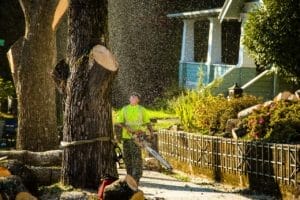
When is the best time to remove a tree? The best time to remove a tree is before it has a chance to cause damage to property or people. Beyond that, the longer answer is that tree removal is probably best done during the tree’s dormant season — typically January, February, and March.

On This Page

For deciduous trees, the dormant season is when their leaves have fallen, making them easier to clear and remove. Plus, at that point, the increased likelihood of winter-hardened ground beneath the tree makes it less likely that tree removal will negatively impact on your lawn.

Spring and summer tree removal often means a longer wait time since those are the busiest seasons for tree service companies. It’s also likely to cost more in spring and summer because, among other things, the springtime addition of new leaf cover makes removal more difficult and time-consuming.

Contact Urban Forest Pro for a free estimate from one of our exceptional, certified arborists. We can remove trees of all sizes and in just about every situation.

4 Things To Consider When Removing A Tree

1. What are your goals for both the tree and your yard? It can be helpful to prioritize your goals. For example, if you have a tree next to your home that causes safety concerns but you really love how it looks and the shade it provides, you can rank your priorities like this:

    • Safety
    • Shade
    • Appearance

You can even get more specific regarding what exactly you like about the tree’s appearance or what your top safety concerns are. If yours is a rental property, you might have completely different goals, such as reducing maintenance and liability worries.

If you simply have a tree that you don’t like, it’s also important to think about why you dislike the tree. For example, does it drop too much sap in the summertime, making your deck a sticky, unusable mess? Even in a case like that, there are alternatives. For example, rather than spending several thousand dollars removing the tree, property owners might consider a several-hundred-dollar treatment to prevent aphids, which are often the actual culprits in sap production. (Aphids feed on sap and secrete “bug poo, aka honeydew.”)

2. What are your options? Be super clear with your arborist about your goals so that they can help you achieve them and/or suggest other options. For example, it may be better to prune a tree rather than remove it. Of course, it’s possible that the opposite is the best course of action: a property owner may want to prune a tree that should actually be removed. If the customer’s goal is to eliminate branches overhanging the house, reduce the height of the tree, or stop a tree from uplifting concrete, there are many cases where the only true answer to those problems is tree removal.

We don’t necessarily like to cut down healthy trees, but trees are renewable; they can be replanted. In many cases, it’s better to remove a tree and start over with the right tree in the right location. Plus, delaying the inevitable can increase the cost of tree removal.

In any case, you can ask questions and get answers by contacting an Urban Forest Pro certified arborist for options!

3. What does the law say? The ultimate decision to remove a tree may not be up to you — even if it’s on your property. In many cases, the final word is provided by the city via a tree removal permit process.

For example, our hometown of Portland, Oregon, has an urban tree canopy that is among the country’s most admired. American Forests named Portland one of the Top 10 cities for urban trees, and the National Arbor Day Foundation has honored Portland as a “Tree City USA” 41 times. Cities are active and often aggressive in monitoring the tree canopy, and unpermitted tree removals can incur fines in the thousands of dollars.

4. What happens to the removed tree? Urban Forest Pro (UFP) works hard to provide tree services in Portland, Oregon, that work best for our clients, the community, and the environment. Every part of the removed tree is recycled and/or reused. The wood is either milled into lumber or used as firewood, and wood chips can be used as mulch to help fight invasive plants and to rebuild native habitats. UFP donates most of this material to nonprofits and various municipalities.

When It’s Time To Remove A Tree

Whether you’re a business owner with a shady lot or a homeowner who’s on the fence when it comes to one of your trees, it’s important to understand that tree removal is sometimes the absolute best — and often only — course of action.

Here are four reasons why tree removal is often the solution:

  1. The tree is diseased. Trees can experience a host of different diseases — some more serious than others. If a disease spreads and begins to kill the tree, it might be easier and more affordable to simply remove the tree instead of trying to save it. The earlier a disease is caught and treated, the easier it is to handle. However, if your tree’s disease has begun to overtake a large portion of it, it might be time to bid it adieu.
  2. It’s impossible to take proper care of the tree. Different types of trees have different pruning demands, and sometimes people don’t know what they’re getting into. Not everyone has the time, skills, money, or patience to care for an especially demanding tree. If you know you don’t have the time and don’t want to contract a landscaper on a regular basis, your life will be a lot easier if you remove the tree and perhaps replace it with a less demanding variety.
  3. It’s grown too close for comfort. Whether a tree was planted too close to a house or if it’s an older tree that’s grown beyond what the planters ever imagined, a tree too close to a building can spell trouble. In a severe storm, if it’s hit by lightning or toppled by strong winds, a tree can cause damage to property and people. Thus, sometimes removing a tree that’s nestled next to a building makes things safer for everybody.
  4. The tree has become a huge distraction. Maybe a tree has grown out of control and is invading electrical wires, blocking key road signs, or dropping fruit directly onto a busy street. Trees can turn into nuisances, especially if they’re overgrown or if the neighborhood has turned from rural to suburban over the years. Someone needs to take care of these trees, and if they’ve become neglected, they can present hazards. After all, it’s important that stop signs remain visible and that cars stopped there aren’t damaged by falling walnuts.

If you’re ready for a tree removal near Portland — or if you need help making a decision — please contact the expert and certified arborists at Urban Forest Pro. They can help you make the best choice for you and your trees.

Our expert arborists are all ISA-certified — every single one of them! They’ll help you determine the best course of action for your specific needs, whether that’s trimming, pruning, removal or any of our many full-service tree care and tree removal services.

This post first appeared on https://www.urbanforestprofessionals.com

Hazards of Fir Trees

Fir Tree Branch Are you partial to fir trees? Whether you grew up in the Great Northwest and being surrounded by firs just feels natural to you, you adore the piney scent, or have a penchant for an evergreen (which a lot of firs are) to enjoy greenery year-round, there’s a lot to love about firs.

It’s also important to know that firs come with plenty of hazards, and some you may not realize until it’s too late.

A fir catastrophe is a tough lesson to learn. Before you start planting these trees, or if you’ve already bought a property that’s rich with them, keep these risks in mind. A little knowledge and a dose of preventative care can help you make the right planting choices—or even prevent a disaster.

1. They’re Prone To Falling

Here’s a little factoid the next time you need to come up with a conversation starter: Fir trees fall over more than any other tree. Usually, they have multiple tops instead of a single leader, or they might have root rot from drainage problems. If you notice standing water around a fir tree, that’s bad news. The upside? If you’re stuck on having firs around, a little pruning and keeping an eye on the root system can help keep your tree upright.

2. They’re Excellent Kindling

There’s a reason there are so many warnings about Christmas tree fires every year. If you celebrate the season with a tree, you know how thirsty firs can get (and how quickly they can dry out). A dry fir, whether indoors or outdoors, is a recipe for a bonfire. Outdoors, an errant cigarette might be all it takes to catch your beloved tree on fire, and if it’s close to a building or car that can be devastating.

3. They’re Toxic

Fir trees are actually mildly toxic, especially to a number of animals. Fir oils, when ingested, can lead to vomiting and diarrhea. The needles themselves aren’t easy to digest, and can even puncture internal organs. Of course, you probably don’t make it a habit of munching on your trees. However, if your child tries it on a silly dare or you have a pet who thinks everything is a snack, this can be a big concern.

4. They’re Natural Cloggers

Some people prefer raking or sweeping up after big-leafed trees like maples, while others prefer picking up needles. If you’re more of a fir-leaner, don’t forget what a slushy mess these trees can be when it’s wet or snowy outside. Plus, needles can get lodged in places leaves can’t, such as the intricate innards of nearby drainage systems. Cleaning them out can be a nightmare, and can even permanently damage some systems. Consider just what type of cleaner you are, and choose a tree that complements it.

Firs are beautiful, majestic and the right choice for many people. However, just like any other long-term relationship, make sure you know what you’re getting into.

This post first appeared on https://www.urbanforestprofessionals.com

How to Recognize Tree Hazards

When most of us think about environmental hazards, our minds are drawn to the weather (floods, storms, etc). But often, that Tree Hazard illustrationweather is part of what causes a less-thought-of danger: falling trees.

Trees do way much more good than bad, but if not looked after, they can also cause serious damage when branches or whole tree falls on homes, power lines, cars, or people.

Fortunately, there are warning signs you can look for that show danger may be imminent. Start by inspecting each tree on your property in a very systematic way. Here are some things to look for:

Start at the top. Trees that have been topped (the top is cut off) present dangers in several ways. First, topped trees are more susceptible to diseases that can weaken them. They are also prone to being top heavy because of excessive crown regrowth and weakly attached upper branches.

A dead tree or branches. One of the more common situations to arise is dead trees or branches. They are generally the most immediate danger and should be removed immediately. Pay particular attention after nasty weather, when branches may be broken and ready to fall at any time. (See why tree removal is not a good DIY project.)

Insects and disease. These can also lead to serious tree hazards. While an arborist is better suited for identifying the specific insect or disease that is causing a problem, an attentive amateur can at least notice there is a problem.

While some diseases cause internal rot that is invisible to the naked eye, often evidence will be displayed through the presence of mushrooms, which may be a sign of decay-causing fungi. Other times, the problem can be clearly seen via rotted wood or even a cavity in the tree. While not every hole is a big risk, you don’t have to be a certified arborist to suspect that this could compromise the tree’s structural integrity.

Look for growth patterns. Even just how a tree is growing naturally can spell trouble. For instance, codominant trunks or branches (trunks that are parallel to one another or branches formed at an acute angle) can become a problem. Codominant branches can form what’s called “included bark” which forms between the two branches. This weakens the area where they come together.

While this doesn’t include every sign you can look for that you have a tree hazard, if you can begin to recognize many of the warning signs and know when you need to take action, you can reduce the risks to you, your family, and to anyone else who may come within reach of the trees on your property.

This post first appeared on https://www.urbanforestprofessionals.com

7 Benefits of Trees You Probably Didn’t Know According To A Leading Arborist

What is the value of a tree? Not in a commercial sense, per se, but a broader sense. There are so many ways that trees enrich our lives and enhance our communities, some you may be aware of, and others that will come as a surprise. Our expert tree care specialists give a breakdown below.

1. Clean air saves lives. Okay, we’re starting with one of the better known benefits of trees… but do you really understand how it directly affects our health? For instance, findings from a study in the Journal of Preventative Medicine suggest that areas without trees may increase the mortality rate related to cardiovascular and lower-respiratory-tract illness.Trees Clean Air

To put in perspective how much a relatively small number of trees can do for our air, according to the U.S. Department of Agriculture “One acre of forest absorbs six tons of carbon dioxide and puts out four tons of oxygen. This is enough to meet the annual needs of 18 people.”

2. Clean water. According to the USDA Forest Service, wooded areas help prevent sediment and chemicals from running into streams. The trees in our forests are involved in filtering and storing close to two-thirds of our country’s water supply.

3. Increase your property’s value. Trees are beautiful. That’s not exactly a startling revelation, but since most people have a positive reaction to trees, it can also carry over to their opinion of a home that’s on the market. And that translates into higher property value. There are many factors that come into play with real estate value, but some research has shown that trees do play a role.

The USDA Forest Service conducted a study trying to quantify the value of trees, and when they looked at Portland, they found that trees in front of or near a home added an average $8,870 to its sale price. On average across the US, they found about a 10 percent increase in property value.

4. Trees make us happy. Researchers have found mental and physical health benefits in people who take the time to experience nature. One study actually found that people who were hospitalized, but had a view of trees from their window, spent eight percent less time there than people who did not have the same view.

5. Forests create jobs. The U.S. Forest Service has stated that people who visit our National Forests spent close to $11 billion in 2012. That spending sustains about 190,000 jobs (full- and part-time). It’s important to note, this only accounts for the job impact of National Forests.

6. Control your temps. The shade and wind-shielding from trees can help keep your home temperatures at a happy medium range, not too hot in the summer and sun can still reach your home in the winter after the leaves have fallen.

7. Control flooding. Trees have the ability to hold a significant amount of water that would otherwise contribute to flooding. Trees also prevent sediment runoff.

Trees play a critical role in not only sustaining life, but making that life more enjoyable. If you need help with planting one, just give our team of leading arborists at Urban Forest Pro a call.

This post first appeared on https://www.urbanforestprofessionals.com

Why Tree Removal is Not a Good DYI Project

Do you consider yourself self-reliant, or at least try to be in as many situations as possible? It’s great to have an independent, do-it-yourself, spirit. However, sometimes the best option is to enlist the help of others. Such is the case with tree removal.

Most of us have seen viral videos of hapless homeowners cutting down trees, only to see them fall in a direction they did not intend, most often towards their homes. Sometimes it’s carelessness, other times it’s well-intentioned people making costly mistakes. While we poke fun at these people, the results are no laughing matter.

Leave the Risk-Taking to the Pros

Tree cutting is dangerous, even for those who make a living doing so. Professional are injured every day. According to the Tree Tree on House

Care Industry Association, there were 84 fatalities in 2012. Of the fatalities reported to the Census of Fatal Occupational Injuries from 1992 to 2007, the average annual rate was 80 deaths.

Another reason it’s wise to defer to a professional arborist is avoiding the legal liability if an accident occurs. If you damage a neighbor’s property, or worse, injure someone, you are on the hook. A licensed and insured arborist takes this potential burden away from you.

In addition to the skills unique to trained tree care professionals, there is specialized equipment that homeowners are not likely to have. Even if you had the skills to do the job, it would not make financial sense to buy or rent this equipment for one-time use.

Then there are proper techniques for “limbing” the tree once it’s down. The potential for danger is not gone after the tree is horizontal. Improper cutting of limbs can lead to injuries, such as the tree rolling on you when picking the wrong branch to cut. Then there’s a stump that needs to be removed.

Even if you think you are cutting at the right angle, that’s not a guarantee it will fall in the direction you expect, since there are a number of other considerations that need to be accounted for. Of course, proper tree removal is so much more than cutting at the perceived right angle. There’s an “undercut” and a “backcut.” Techniques are tailored to the tree’s condition, weather conditions, the surrounding landscape, and much more.

Professionals go through this process and use the potentially dangerous tools all the time. Risks are not always easy to identify, so familiarity and expertise almost always trump well-intentioned do-it-yourself ambition. If you have a tree you need removed from your property, give us a call today.

This post first appeared on https://www.urbanforestprofessionals.com

This website nor its owners are an actual service provider, this website is a referral service. When you place a phone call from this website, it will route you to a licensed, professional service provider that serves your area. For more information refer to our terms of service.

© TreeRemovalandTrimming.com

(877) 959-3534